Thursday, 27 April 2017

To Kill A Mockingbird Analysis of chapters 15-21

Again, Scout's innocent perspective makes the reader unaware of the possible violence outside the Maycomb jail in chapter 16. The men who come that evening are a mob with the intention of killing Tom Robinson. Atticus was staying outside the jail with the hope of disarming the situation. When Scout and the boys arrive on the scene, they don't truly comprehend what is happening. Scout does not understand these men intend to kill Tom before he can even go to trial. It is the children's presence that disrupts the mob and eventually causes them to leave. The children make the men awkwardly aware of their cowardice and shame.
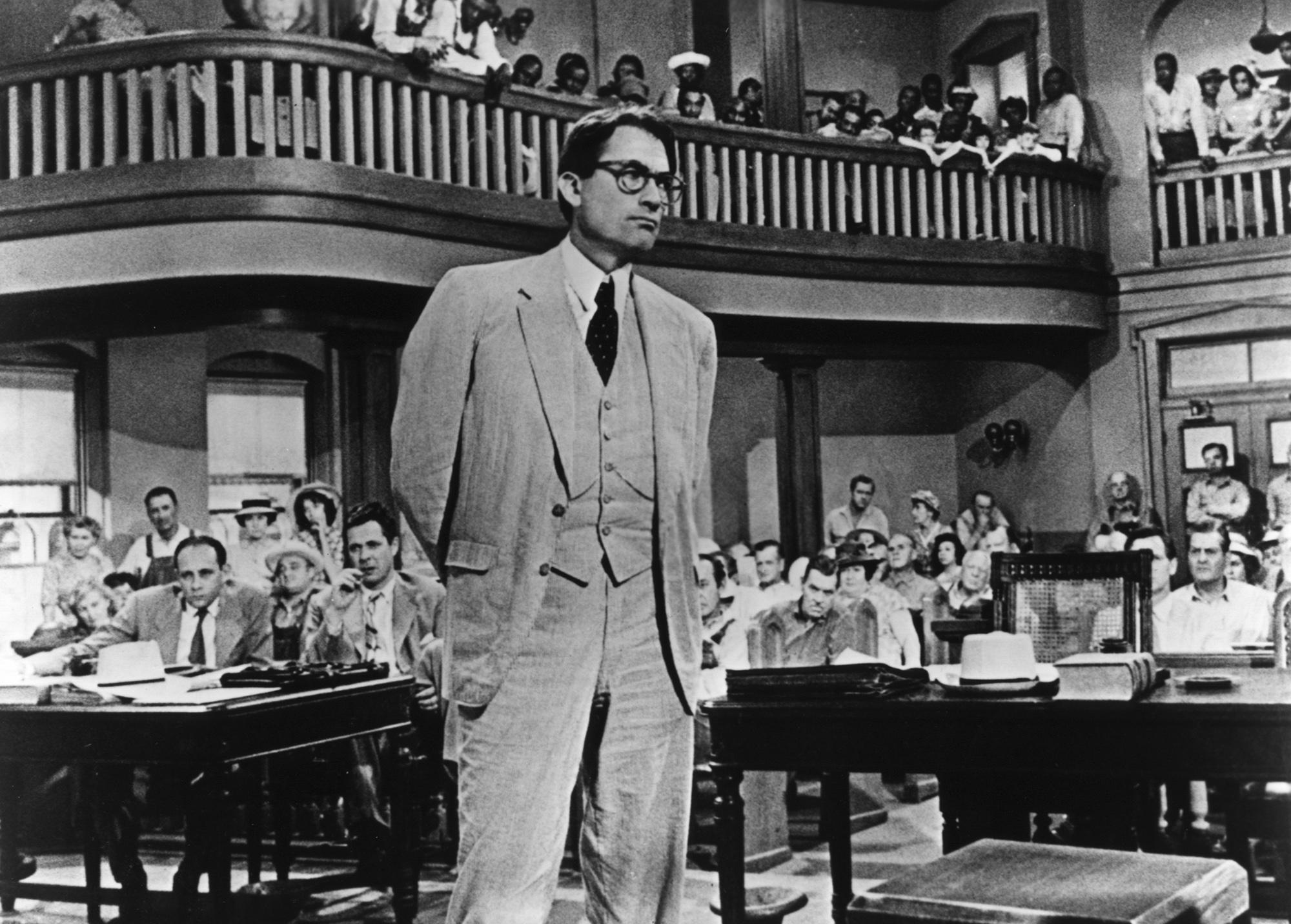
Image result for to kill a mockingbird
When Mayella Ewell takes the stand, she calls into question the character of the white men in the courtroom. The fact that her word is not automatically taken over the word of a black man causes her to lash out and accuse the men of not being true gentlemen. Given the age-old code of Southern chivalry, this is a piercing accusation, and one that wins the case. The true Southern gentlemen is always supposed to defend the character of a white woman. Despite the certainty of most of the people in the courtroom, Tom Robinson will go to jail for this crime no matter what the facts present. A fear resides in Maycomb, and the South of this era, to render any other verdict. Old habits of racism and false nobility, like the code of the Southern gentleman, die very hard. It is seen as a victory that the jury took so long to deliberate. Atticus knew from the beginning he could never win this case, but that perhaps he could cause the town to reflect on their notions of race and justice. In this regard, the trial was a success.


I hope this was helpful. We want to provide more original content for you. Please continue to support the blog by clicking on the advertisements whenever you visit our blog. This helps us to continue to provide free content for you.

Tuesday, 25 April 2017

Little Boy Crying by Mervyn Morris


Stanza 1
The poem begins with a description of a child crying. However, his cries seem harsh and fierce “Your laughter metamorphosed into howl”.  This also suggests that the child is normally a happy one and something happened to have changed his happiness.

The last line in the stanza informs us that the reason why the child is crying is because he has been beaten “the quick slap struck”.

The little boy is also staring at the parent hoping that he might be feeling guilty for hitting him. This might mean that the child is trying to play on the parent’s emotion “you stand there angling for a moment’s hint”.

Stanza 2
It is important to note that the stanza is giving the point of view of the parent. The parent is imagining that the child is demonizing him for hitting him “The ogre towers above you, that grim giant,// empty of feeling a colossal cruel”.

From this, we can understand that the parent thinks that the child believes that he is cruel and evil for hitting him and therefore is thinking of ways to overcome or get away from the parent.

Stanza 3
Poet makes it clear that the father loves his son. However, he is slapping him for is own good. He also suggests that the father is hurt by the son’s tears and would do anything to make him stop crying. “This fierce man longs to lift you//……” Yet, the lesson must be taught.

Stanza 4
Maybe this stanza suggests that no matter that there are often important behaviour or lessons children must learnt by children.

Themes

Parent – Child Relationship
The father seems to be firm and strict with his son. Although he loves him he does not allow him to have his own way.

Childhood Experiences

The little boy experiences pain and resentment for his parent. Unlike Ana, his childhood is not one that is carefree without any consequences for undesired behaviour.    

Parenting
The father tries to be a good parent. In his eyes there are some lessons that his son must learn. Therefore, he carries out physical punishment so that he can learn these lessons.


I hope this was helpful. We want to provide more original content for you. Please continue to support the blog by clicking on the advertisements whenever you visit our blog. This helps us to continue to provide free content for you.

Monday, 24 April 2017

Sample English SBA A and B Reflection


This sample reflect was created by teachers of the Rusea's High School after an English SBA workshop I conducted. The teachers watched the above video and pretended that they were writing a reflection based on the Effects of scamming on Individuals. Please note that this sample is based only on one artefact.


While watching the video on ‘The Effects of Scamming on Victims,’ I was overwhelmed by different emotions. The video portrayed the family of a victim who was expressing how scamming led their family member to suicide. Initially, I felt extremely ashamed because Jamaica is my country and is branded as ‘scamming capital.’ It is quite disturbing to see these happenings in my country. I was also empathetic towards the victims as they suffered a great loss. Vulnerable and older people seem to be the target, as the video showed. The video also showed the despair of both the families and the victims who are often left with nothing. This video has inspired me to speak against scamming as it is wrong and can cause serious physical and psychological damages to the victims and their families who are often left to pick up the pieces. This video reminded me of the infamous Cash Plus scandal which affected hundreds of Jamaicans in a negative way.

The writer’s use of Language Techniques has helped me to greater analyse the piece thus drawing conclusions as well. The use of formal language by the reporter and the Lottery Scamming Task Force Police was easily understandable by the researcher. The use of the term “Lottery Scamming” and providing a simple definition was quite effective in allowing anyone without prior knowledge of the phenomena to understand what it is. In addition, I could identify with victims who were interviewed as they utilized simple structured sentences that appealed to the researcher’s emotion causing her to be sympathetic towards victims and angry towards the ‘Scammers’. This video has helped me to really understand how the victims are negatively affected by this gruesome act and feel the exact emotions they feel through the tone of despair, disappointment and sadness utilized in the video.


The sub-theme ‘How Scamming Affects the Victims’ has reshaped my thoughts and intentions about attractive activity of scamming. Having witnessed through the video how scamming has resulted in a victim taking his own life because he realized that he was scammed out of his life’s earnings, has truly touched me. As a result, I would want anyone to feel so victimized that they commit suicide. As a result, I would discourage persons around her who scam. On the other hand, even though I am compelled I may not report to the authorities any incidents of scamming as they cannot be trusted. In order not to lose her life, I will only speak to family members and friends she is close to about discontinuing such activity.


I hope this was helpful. We want to provide more original content for you. Please continue to support the blog by clicking on the advertisements whenever you visit our blog. This helps us to continue to provide free content for you.

Sunday, 23 April 2017

Improving Comprehension Skills- Making Inferences

Inference is a "foundational skill" because inferring requires higher order thinking skills, it can be difficult for many students. However, it can be taught through explicit instruction in inferential strategies

What It Means To Infer

Stopping to think and rereading if necessary

Connecting what you know to the words and pictures

Recapping what has happened so far

Asking a question about what could happen next

Paying attention to details in the pictures

Thinking about what the words could mean

Talking to yourself and then stating an opinion about what you have read

Trying to picture it in your mind

Combining all the clues left by the author

Coming up with a conclusion, guess, or bigger idea

How to Teach Inference
                                                                                                                                                                      
One simplified model for teaching inference includes the following assumptions:

a. We need to find clues to get some answers.
c. We need to add those clues to what we already know or have read.
d. There can be more than one correct answer.

e. We need to be able to support inferences.


Four questions that can be posed to students (Marzano 2010) to facilitate a discussion about inferences are:

1. What is my inference?
2. What information did I use to make this inference?
3. How good was my thinking?
4. Do I need to change my thinking?


   Resource sites: wvde.state.wv.us/strategybank; http://www.readingrockets.org


I hope this was helpful. We want to provide more original content for you. Please continue to support the blog by clicking on the advertisements whenever you visit our blog. This helps us to continue to provide free content for you.


Powered by Blogger.