Showing posts with label To Kill a Mockingbird Analysis. Show all posts

Tuesday, 23 May 2017

To Kill A Mockingbird Chapters 20-30 Questions

Chapter 20
1. Scout says that “Mr. Dolphus Raymond was an evil man”. Is she right?

2. In most states of the USA people who drink alcohol in public places are required to hide their bottle in a paper bag. Why does Dolphus Raymond hide Coca-Cola in a bag?

3. What, according to Atticus, is the thing that Mayella has done wrong? Explain, in your own words, Atticus's views on people's being equal. 

Chapter 21
1. What does Jem expect the verdict to be? Does Atticus think the same? 

2. What is unusual about how long it takes the jury to reach a verdict? Is the verdict predictable or not? 

 3. As Scout waits for the verdict, she thinks of earlier events. What are these and how do they remind us of the novel's central themes? 

 Chapter 22
1. Although Atticus did not want his children in court, he defends Jem's right to know what has happened. Explain, in your own words, Atticus's reasons for this. (Look at the speech beginning, “This is their home, sister”.)

2. Miss Maudie tells Jem that “things are never as bad as they seem”. What reasons does she give for this view?

3. Why does Dill say that he will be a clown when he grows up? Do you think he would keep this ambition for long?

4. This story is set in the 1930s but was published in 1960. Have attitudes to racism remained the same (in the USA and the UK) or have there been any changes (for the better or worse) since then, in your view?

5. Why does Bob Ewell feel so angry with Atticus? Do you think his threat is a real one, and how might he try to “get” Atticus? 

Chapter 23
1. What do you think of Atticus's reaction to Bob Ewell's challenge? Should he have ignored Bob, retaliated or done something else?

2. What is “circumstantial evidence”? What has it got to do with Tom's conviction?

3. What does Atticus tell Scout about why the jury took so long to convict Tom?

4. Why does Aunt Alexandra accept that the Cunninghams may be good but are not “our kind of folks”? Do you think that people should mix only with others of the same social class? Are class-divisions good or bad for societies?

5. At the end of this chapter, Jem forms a new theory about why Boo Radley has never left his house in years. What is this? How likely is it to be true, in your opinion?

Chapter 24
1. Do you think the missionary ladies are sincere in worrying about the “Mrunas” (a tribe in Africa)? Give reasons for your answer. 

 2. Compare the reactions of Miss Maudie and the other ladies when Scout says she is wearing her “britches” under her dress.

3. What is your opinion of the Maycomb ladies, as depicted in this chapter?

4. Explain briefly how Tom was killed. What is Atticus's explanation for Tom's attempted escape. Do you think agree with Atticus? How, in this chapter, do we see Aunt Alexandra in a new light? How does Miss Maudie support her?

Chapter 25 
1. How does Maycomb react to the news of Tom's death? 

2. Comment on the idea that Tom's death was “typical”?

3. Explain the contrast Scout draws between the court where Tom was tried and “the secret courts of men's hearts”. In what way are hearts like courts?

Why did Jem not want Scout to tell Atticus about Bob Ewell's ("One down and about two more to go")? Was this a wise thing to ask her to do?


Chapter 26
1. In her lesson on Hitler, Miss Gates says that “we (American people) don't believe in persecuting anyone”. What seems odd to the reader about this claim? 

 2. Why is Scout puzzled by Miss Gates' disapproval of Hitler?


3. Why does Scout's question upset Jem? Is there a simple answer, or any answer, to the question (“How can you hate Hitler an’ then turn around an be ugly about folks right at home?")

Chapter 27
1. What three things does Bob Ewell do that alarm Aunt Alexandra?

2. Why, according to Atticus, does Bob Ewell bear a grudge? Which people does Ewell see as his enemies, and why?

3. What was the purpose of the Halloween pageant? What practical joke had persuaded the grown ups to have an organized event?

Chapter 28 
1. Comment on the way this chapter reminds the reader of earlier events in the novel.

2. Why does Jem say that Boo Radley must not be at home? What is ironic about this? (Is it true? Does he really mean it? Why might it be important for him and Scout that Boo should not be at home?)

3. Scout decides to keep her costume on while walking home. How does this affect her understanding of what happens on the way?

4. Why had Atticus not brought a chair for the man in the corner?

Chapter 29 
1. What causes the “shiny clean line” on the otherwise “dull wire” of Scout's costume?

2. What explanation does Atticus give for Bob Ewell's attack?

3. What does Heck Tate give as the reason for the attack?

4. Do you think the sheriff's explanation or Atticus's is the more likely to be true?

Chapter 30 
1. Who does Atticus think caused Bob Ewell's death?

2. Why does Heck Tate insist that Bob Ewell's death was self-inflicted? In what way is this partly true?

3. Is Heck Tate right to spare Boo the publicity of an inquest? Give reasons for your answer.

4. How does the writer handle the appearance, at the end of the story, of Boo Radley?


Chapter 31 
1. How do the events of the final chapters explain the first sentence in the whole novel?

2. Comment on the way the writer summarizes earlier events to show their significance.

3. How does Scout make sense of an earlier remark of Atticus's as she stands on the Radley porch? 

4. How much of a surprise is it to find what Boo Radley is really like? Has the story before this point prepared the reader for this discovery?

5. At the end of the novel, Atticus reads to Scout. Comment on his choice of story. Does it have any connection with themes earlier in the novel and in its ending?


resource site:268759.wikispaces.com/How+To+Kill+A+Mockingbird+Ch.+Questions

Thursday, 27 April 2017

To Kill A Mockingbird Analysis of chapters 15-21

Again, Scout's innocent perspective makes the reader unaware of the possible violence outside the Maycomb jail in chapter 16. The men who come that evening are a mob with the intention of killing Tom Robinson. Atticus was staying outside the jail with the hope of disarming the situation. When Scout and the boys arrive on the scene, they don't truly comprehend what is happening. Scout does not understand these men intend to kill Tom before he can even go to trial. It is the children's presence that disrupts the mob and eventually causes them to leave. The children make the men awkwardly aware of their cowardice and shame.
Image result for to kill a mockingbird
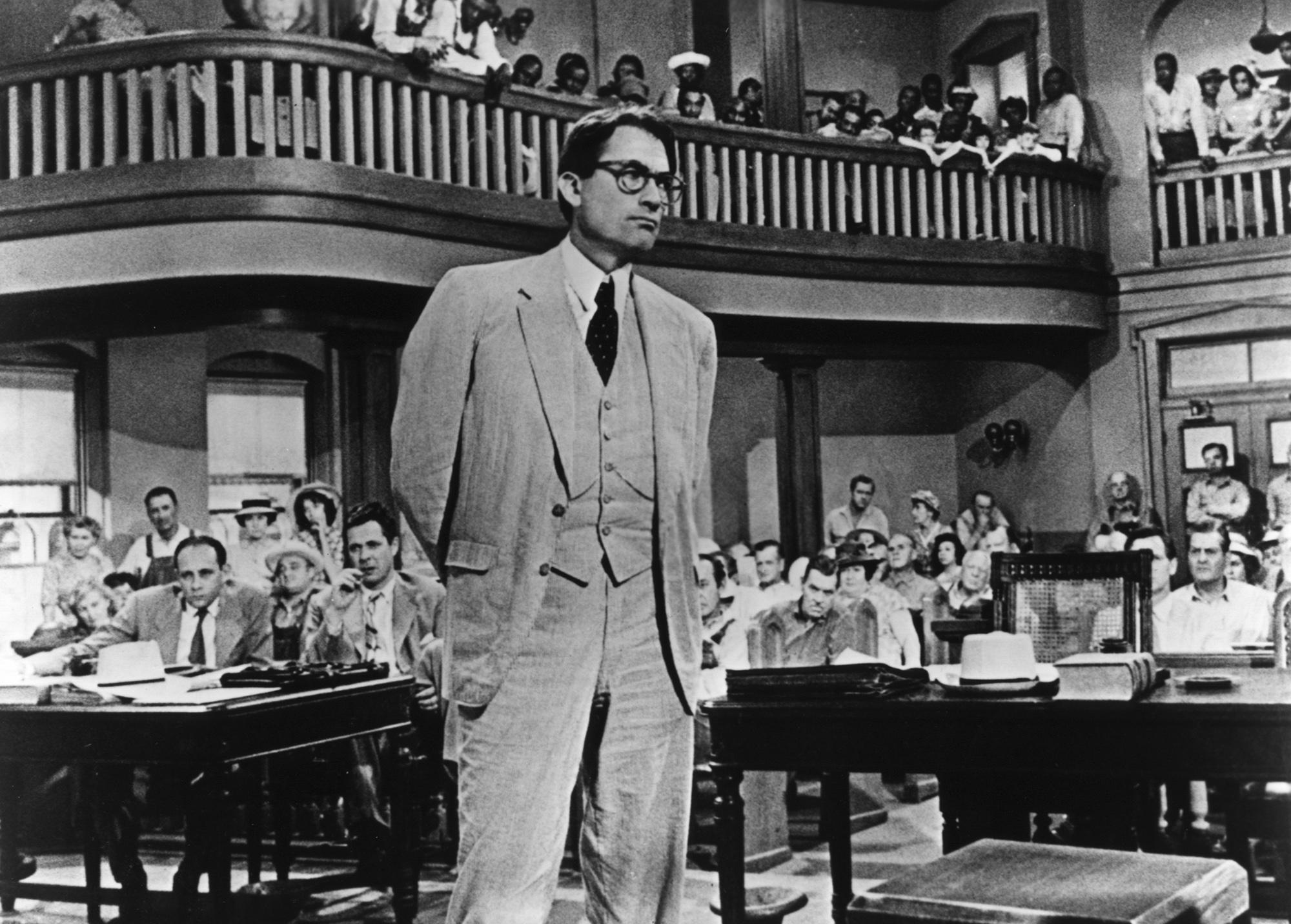
When Mayella Ewell takes the stand, she calls into question the character of the white men in the courtroom. The fact that her word is not automatically taken over the word of a black man causes her to lash out and accuse the men of not being true gentlemen. Given the age-old code of Southern chivalry, this is a piercing accusation, and one that wins the case. The true Southern gentlemen is always supposed to defend the character of a white woman. Despite the certainty of most of the people in the courtroom, Tom Robinson will go to jail for this crime no matter what the facts present. A fear resides in Maycomb, and the South of this era, to render any other verdict. Old habits of racism and false nobility, like the code of the Southern gentleman, die very hard. It is seen as a victory that the jury took so long to deliberate. Atticus knew from the beginning he could never win this case, but that perhaps he could cause the town to reflect on their notions of race and justice. In this regard, the trial was a success.


I hope this was helpful. We want to provide more original content for you. Please continue to support the blog by clicking on the advertisements whenever you visit our blog. This helps us to continue to provide free content for you.

Monday, 3 April 2017

To Kill A Mockingbird Chapters 9-14 Analysis

Image result for to kill a mockingbird quotes


As Scout's fights with school children, and her cousin Francis, would suggest, the trial is going to be a major hurdle for the Finch family. In an old fashioned Southern town like Maycomb, racism abounds.

 The town is not so much upset that Atticus is defending Tom, which is his job. They are upset that Atticus plans to defend Tom to the best of his ability. Maycomb residents believe Atticus should not put any effort into the case and let it all be done with. When a black man has been accused of raping a white woman, the verdict has already been decided regardless of the facts. Even Atticus' family sees the situation this way, which explains Scout's fight with her cousin.

Sunday, 19 March 2017

To Kill A Mockingbird Chapters 11-15 Summary


Image result for to kill a mockingbird quotes

Chapter 11

The summer after second grade the children decide to expand their horizons. They spend more time going into town, which requires them to pass the house of Miss Dubose, who never misses an opportunity to shout at the children. This infuriates Jem, but Atticus tells him not to get upset. On a particular walk, Miss Dubose makes remarks about Atticus to the children. Jem becomes enraged and on the walk home destroys Miss Dubose's bushes. Atticus sends Jem back to clean up his mess and to work on her shrubs for every weekend. When Jem returns he tells Atticus that Miss Dubose wants him to read to her instead.

The next weekend Jem, accompanied by Scout, goes to read to Miss Dubose. Miss Dubose is very ill and spends most of the afternoon in a fog. After several weekends, they are free of reading to her.

Atticus goes to visit Miss Dubose one weekend. When he returns he announces that she has passed away. Atticus explains to the children that Miss Dubose had become addicted to morphine as a result of her illness and that she had spent the final months of her life freeing herself of the addiction. He tells them that their company helped her keep her mind off her pain. Atticus opens a box with a piece of her shrub in it. It is a gift for Jem, who is angered by the gesture. Atticus tells them what a strong and brave woman Miss Dubose was for fighting her addiction.

Chapter 12

As Jem grows older he also grows moodier, leaving Scout to spend more time with Calpurnia. Scout watches Cal and realizes that maybe being a girl isn't so bad.

Atticus has to leave the family to attend an emergency session of the legislature. Calpurnia has to stay with the children and take full care of them in his absence. She is not sure if they should be going to church by themselves and decides that they should come with her on Sunday.

When they arrive at Cal's church, the children cause quite a stir. They are the only white faces in the congregation. One woman seems to resent their presence, but the rest of the congregation welcomes them freely. They know Atticus and have the utmost respect for him. While in attendance, the children overhear things about Tom Robinson and his case. His wife cannot get any work in the town and Tom has been accused of rape. Scout is not sure what rape is, but knows it can't be anything good.

As they walk home from church, Aunt Alexandra is waiting on the porch for them.

Chapter 13

Aunt Alexandra notifies them that she has come to stay with them. She immediately makes herself at home. When Atticus returns he explains that Aunt Alexandra is here to teach the children, Scout in particular, something about breeding and refinement. Alexandra is not pleased with the way Atticus is raising the children and feels that she is needed. The kids are not pleased by the news, having no idea that they have been behaving improperly.

chapter 14

Scout asks what rape is. Atticus asks her where she heard the word and Scout explains about the trip to Cal's church. Alex is shocked to hear that the children were in a black church. She tells Atticus in confidence that they should let Calpurnia go, but he is adamant that she is part of the family and will not be leaving anytime soon.

Jem takes Scout aside that evening and tells her that she should do her best not to upset Aunt Alexandra. Scout believes Jem is trying to act superior and starts a brawl with him. She is sent to her room and thinks she hears a snake under her bed. Upon closer inspection, they realize it is not a snake, but a runaway Dill. He confesses that he doesn't like living at home and took the train to Maycomb. Atticus allows Dill to stay with them, but informs Dill's Aunt Rachel about the situation.

chapter 15

Dill's parents allow him to stay in Maycomb. One evening, the sheriff stops by the house with a group of men from town. Atticus talks with them and Scout tries to overhear. They talk about Tom Robinson's case and how Tom is being moved into the Maycomb jail.

resourse site: www.homework-online.com

Thursday, 9 March 2017

Analysis of To Kill A Mockingbird Chapters 1- 8

Analysis of Part 1 (Chapters 1 - 8)

source
The first chapters of the novel paint the town of Maycomb as a quiet and idyllic town. The children play freely, the neighbors gossip innocently on the streets, and everything moves very smoothly. Of course, this will not be the case throughout the novel. These chapters set the tone for a town that is going to be exposed. The lazy rural façade will crumble and the racism and double standards that have been in the minds of the citizens for years will be exposed.

This is where Boo Radley comes into play. The town shows a fear and confusion towards the Radley family. They are different, and this leaves them on the outskirts of the community. The children's games and gossip about the Radleys will mirror the town's attitudes toward Tom Robinson and his plight later. It is the fear of the different and the unfamiliar that shakes this town, and the Radleys are the perfect example of it. They have been neighbors for years, but the town still treats them like fresh news.
Powered by Blogger.